Showing posts with label lawn. Show all posts

Tuesday, 10 June 2014

What happened when I said "No to the Mow"...

Dr Trevor Dines
Plantlife Botanical Specialist


It was not a good start. I marked out a patch of lawn in early March, selecting an area that wasn’t particularly special but did at least have a few cowslips. I could see their rounded leaves poking through the turf and thought it’d be nice to spare them the mower and allow them to flower.

But a few weeks later they had gone – completely vanished – and the grass didn’t seem to have grown much either. I couldn’t work it out. Then, returning from work one day I found the culprits; three sheep had found their way through the fence and were having a very merry time munching away on the lawn. I’m amazed they were so selective, but they’d found each cowslip plant and eaten them right down to the roots.

My new campaign, “say no to the sheep”, started with a patch they’d thankfully not reached. The mower came out of hibernation in a grumbling, spluttering mood and over the next few weeks the patch began to take on its shape and texture as the grass grew. Now, I’ll be the first to admit that my lawn won’t win any prizes in the next series of “The Great British Lawn Off” or “Come Mow With Me”; it’s not seen any herbicides or fertilizers in the 18 years I’ve looked after it so it’s pretty full of things other than grass. But this doesn’t mean they get to flower. Most of the lawn is kept pretty tightly mown so it’s rare that anything taller than a daisy gets to raise its head above the blades.


It has therefore, frankly, been a joy therefore to see what has come up. While not a mad riot of wild flowers, the procession of species has been fascinating to watch over the last few weeks, starting with cuckoo flower, dandelions and thyme-leaved speedwell, moving on to creeping buttercup and a few glorious oxeye daisies at the moment, and with self heal and clovers to come. It’s been a delight to actually pause and look in detail at a small patch of grass, noticing that this is where the pheasants now like to linger and where banded snails are most frequent.
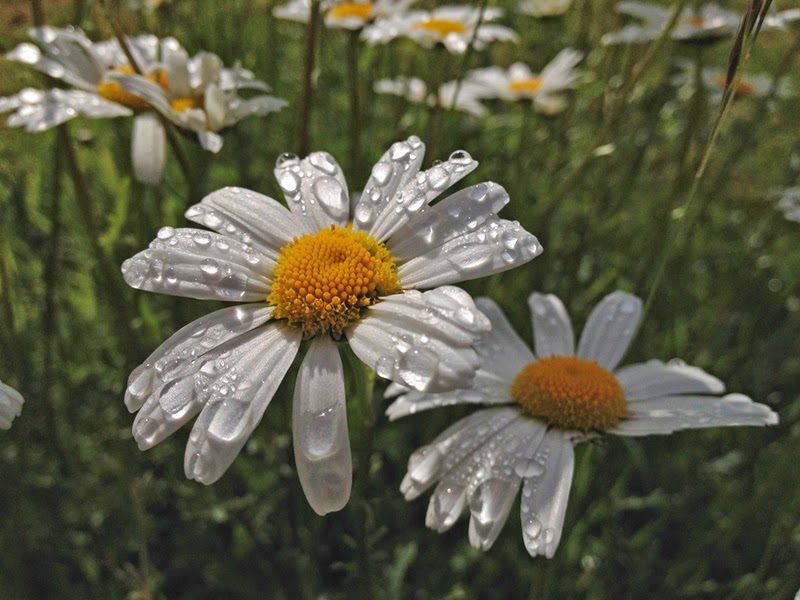
The grasses are also playing their part of course, with tiny spreading meadow-grass now dwarfed by Yorkshire fog with its soft, downy leaves and purple haze. Common sorrel is also there, looking rusted-red and hinting at the poor nature of the soil. In total, I’ve found eighteen species in a 2m x 2m square, not a spectacular haul but far better than your average rye-grass and bent-grass dominated lawn. It’s not a diversity of species that I’m looking for (although this will come in time) but giving an opportunity for plants to flower, provide nectar and pollen, set seed, be eaten by caterpillars and froghoppers and maybe even give a home to a grasshopper or two.

In a way, my patch of unmown lawn is like a little window on a real wildflower meadow or roadside verge. Around it, my lawn is green but bereft of any colour, just like many of the improved fields around our relict wildflower meadows and beside our verges. Many of the plants are still there: if we just give them a chance to grow and flower they grasp the opportunity and work wonders for our wildlife.


Thursday, 27 March 2014

Setting Up a No-Mow Zone.

Luke Morton
Plantlife Moderator


"Never ask of others what you are not willing to do yourself" said Eleanor Roosevelt and with that advice in mind, I have decided to take Plantlife's Say No to the Mow challenge by making a No-Mow Zone in my own back garden.

For those who have not heard of it, Say No to the Mow is a bit like a botanical Movember: both involve allowing a hirsute patch to flourish where normally you'd keep it cropped short. But instead of the hair on your upper lip, Plantlife is asking you to spare a small "No-Mow Zone" of lawn from your mower's blades this summer. Then as it begins to flourish, you can download a free ID sheet featuring fourteen key wild flowers and enter which ones you spot online. The results will form a blooming great map of the UK, showing what’s in flower and when.

But first things first: Where should I put my No-Mow Zone? Plantlife botanist (and passionate gardener) Dr Trevor Dines suggested choosing a spot away from the beds.


The grass here has not been mowed since last autumn. As a rule of thumb, the longer its been since you last mowed your patch the more likely you'll get wildflowers. March is a key cut-off month as plants are beginning to sprout for the spring, so any mowing that occurs later could stop some in their tracks.

Now I need to mark it out. Here's what I'll need:


There's no limit to the size or shape of your No-Mow Zone. You could make it the entire lawn or spell out your name. We say the ideal size for a No-Mow Zone is 2m squared, but as I've only a small garden I'm opting for 1m x 1m. Using the tape measure I place a peg at each corner:


With the pegs in place I then apply some string to keep that hungry mower at bay...


A finishing touch: my No-Mow Zone security guard. Would you mess with a gnome like this?


And there it is! Ready to flourish.


Next stop downloading my free ID sheet and adding what pops up to the online map which of the wildflowers pop up.

Joining me and my gnome in Saying No to Mow? We'd love to hear how you're getting on. Share your stories, sightings and photos with us on Twitter adding #saynomow.